
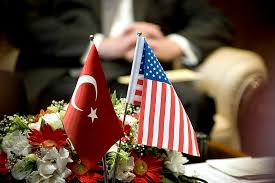
The economic relationship between the United States and Türkiye has evolved into a multidimensional partnership shaped by trade, foreign direct investment (FDI), defense industry collaboration, and growing technology ties. While political dynamics occasionally influence the relationship, economic cooperation remains a stabilizing and strategic pillar for both countries.
Foreign Direct Investment (FDI): A Two-Way Economic Bridge
The United States is one of the leading foreign investors in Türkiye. American companies operate across key sectors including:
Energy
Finance
Manufacturing
Consumer goods
Digital services
Major U.S. firms such as Ford Motor Company, General Electric, and Amazon maintain operations or partnerships in Türkiye, contributing to employment, exports, and technology transfer.
At the same time, Turkish firms are expanding their footprint in the United States. Companies like Türk Hava Yolları and Beko have strengthened commercial ties and investment presence in the American market.
FDI flows support:
Job creation in both countries
Integration into global supply chains
Increased bilateral trade (which consistently reaches tens of billions of dollars annually)
Knowledge and innovation transfer
Despite periodic political tensions, the long-term economic interdependence continues to deepen.
Defense Industrial Links: Strategic and Industrial Interdependence
Defense cooperation has historically been a cornerstone of U.S.–Türkiye relations through NATO membership. Türkiye has long participated in joint defense programs with American partners.
One notable example is Türkiye’s past participation in the Lockheed Martin-led F-35 Lightning II program, where Turkish companies contributed to parts manufacturing within the global supply chain.
Beyond large-scale programs, collaboration has included:
Joint production projects
Defense technology transfers
Maintenance and logistics agreements
NATO interoperability initiatives
At the same time, Türkiye has significantly expanded its domestic defense capabilities through companies such as Baykar, particularly in unmanned aerial vehicle (UAV) technologies. This growth has reshaped the defense partnership, shifting it toward a more balanced industrial relationship.
Looking forward, rebuilding trust and identifying new cooperative frameworks in aerospace, cybersecurity, and advanced systems could revitalize bilateral defense ties.
Technology Partnerships: The Next Frontier
Technology and innovation are becoming central to U.S.–Türkiye economic cooperation. Areas of growing engagement include:
Artificial intelligence
Fintech
E-commerce
Renewable energy technologies
Digital infrastructure
American tech giants like Microsoft and Google maintain regional operations and cloud infrastructure partnerships in Türkiye.
Meanwhile, Türkiye’s vibrant startup ecosystem—particularly in Istanbul—has attracted international venture capital and strengthened links with Silicon Valley. Turkish entrepreneurs increasingly collaborate with U.S.-based accelerators and investment funds.
Opportunities for expanded cooperation include:
Joint R&D programs
University–industry partnerships
Clean energy innovation
Semiconductor supply chain collaboration
As global supply chains diversify, Türkiye’s geographic location and industrial capacity make it a strategic technology and logistics hub between Europe, Asia, and the Middle East.
Challenges and Opportunities Ahead
Like many international economic relationships, U.S.–Türkiye cooperation faces challenges:
Regulatory uncertainty
Trade disputes
Sanctions-related issues
Geopolitical divergences
However, economic pragmatism often prevails. Both countries recognize that:
Strong trade ties enhance strategic resilience
Investment flows promote stability
Technology collaboration fuels long-term competitiveness
With structured dialogue mechanisms and renewed economic diplomacy, the partnership holds significant growth potential.
U.S.–Türkiye economic cooperation extends far beyond trade statistics. It is a dynamic relationship built on investment flows, defense industrial integration, and expanding technology partnerships.
While political developments may create fluctuations, the structural economic foundations between the United States and Türkiye remain strong. The future of the partnership will likely be shaped not only by geopolitics but also by innovation, industrial collaboration, and mutual economic opportunity.