
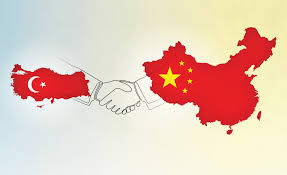
Economic cooperation between Türkiye and China has expanded significantly in recent years, particularly within the framework of the Belt and Road Initiative (BRI). As global trade routes evolve, this partnership is gradually reshaping Türkiye’s role in Eurasian connectivity and international logistics networks.
For Türkiye, deeper engagement with China offers opportunities to diversify export markets, attract infrastructure investment, and strengthen its position as a regional trade hub connecting Asia and Europe.
Türkiye’s Strategic Role in the Belt and Road Initiative
The Belt and Road Initiative, launched to improve economic connectivity across Asia, Europe, and Africa, focuses on infrastructure development, trade facilitation, and financial cooperation.
Türkiye occupies a particularly important position in this initiative through the Middle Corridor, a major transportation route linking China to Europe through Central Asia, the Caucasus, and Anatolia.
This geographic advantage allows Türkiye to function as a logistics bridge between Eastern and Western markets. Investments in railways, ports, highways, and logistics hubs are helping to reduce transportation times and costs along this corridor.
Projects that improve rail connectivity and port capacity can make Turkish trade routes increasingly attractive for global supply chains and Eurasian trade flows.
Growth in Türkiye–China Bilateral Trade
Trade between Türkiye and China has expanded rapidly over the past two decades. China has become one of Türkiye’s largest import partners, supplying a wide range of industrial goods, including:
- Machinery and manufacturing equipment
- Electronics and technology products
- Intermediate goods used in Turkish industrial production
At the same time, Türkiye has been working to increase its exports to China in order to balance bilateral trade. Key export sectors include:
- Agricultural products
- Minerals and natural resources
- Automotive components
- Machinery and industrial equipment
- Textile and apparel products
Improved transportation corridors and logistics infrastructure linked to the Belt and Road Initiative may help facilitate trade flows and improve market access for Turkish exporters.
However, a significant trade imbalance remains, as Türkiye’s imports from China continue to exceed its exports. Addressing this imbalance remains a central objective in the economic dialogue between the two countries.
Export Diversification through Eurasian Connectivity
Infrastructure and logistics projects connected to the Belt and Road Initiative also offer Türkiye opportunities to diversify export destinations beyond traditional European markets.
Enhanced rail and road connectivity across Central Asia can help Turkish companies reach emerging markets along the Eurasian corridor more efficiently.
Several Turkish industries are particularly well positioned to benefit from expanded trade routes, including:
- Construction materials
- Household appliances
- Automotive parts
- Processed food products
- Machinery and industrial equipment
Improved connectivity allows Turkish firms to expand their regional market presence while reducing dependence on a limited number of export destinations.
Financing and Investment under the BRI Framework
Another key dimension of Türkiye–China economic cooperation involves investment and development financing.
Chinese financial institutions and development banks have increasingly supported infrastructure and energy projects linked to BRI corridors. These partnerships may include:
- Financing for railway and transportation infrastructure
- Joint investments in logistics hubs and industrial zones
- Energy and power generation projects
Financial cooperation mechanisms—such as currency swap agreements and bilateral financial arrangements—can also facilitate trade transactions between Turkish and Chinese companies.
Access to diversified financing sources can support large-scale infrastructure development while strengthening Türkiye’s long-term ambition to become a regional logistics and trade hub.
Conclusion: Strategic Opportunities and Structural Challenges
Türkiye’s growing engagement with China through the Belt and Road Initiative is gradually transforming trade routes, infrastructure investment, and regional economic integration across Eurasia.
Improved connectivity and logistics networks may create new opportunities for export diversification, infrastructure development, and supply chain integration. At the same time, addressing the trade imbalance between Türkiye and China remains an important challenge.
As Eurasian trade corridors continue to evolve, Türkiye’s strategic geographic position—combined with effective trade and infrastructure policies—could strengthen its role as a key gateway between Asian and European markets.